AI-led growth and adoption · B2B SaaS

AI adoption is a behaviour change problem.

I lead AI and innovation for a 200+ person marketing organisation at RELX. That means a seven-tool AI stack, a five-person agent team, and a repeatable adoption playbook that took monthly usage above 90%.

Portrait of Aileen Christensen
3h → 20m
Average content production time per asset, after rebuilding the workflow around AI
€250K
Estimated annual savings from the AI content workflow
90%+
Monthly adoption across at least one GenAI tool, sustained
2× ARR
SciVal grew from around $20M to $40M with me as its product marketer

Approach

Build the conditions, not just the licences.

I grew up between Copenhagen, the west coast of Ireland and Melbourne, and have lived in Amsterdam for thirteen years. Each move taught me the same thing: explore first, ask questions, and work out how a system runs before you try to change it.

That is what I brought to RELX when it was still unclear what AI would mean for marketing. I built the case, answered the objections before anyone raised them, and pitched a role that did not yet exist. They said yes, and that role became the engine for how a 200+ person team learned to work with AI instead of around it.

The hardest part was never the tools. It was getting AI written into people's actual objectives, so that it stopped being something they tried once and forgot. I did that one habit, one workflow and one development conversation at a time, until usage became simply how the team works.

  1. i

    Workflow before habit, habit before objective

    Rebuild the work first, then make the new way the easy default, then write it into goals so it holds.

  2. ii

    Specialist entry points for each team

    Different teams need different tools and different entry points. A single enterprise rollout is usually the slowest route.

  3. iii

    Guardrails that create speed

    Clear governance gives people permission to experiment, which is what turns a pilot into an operating model.

Experience

Thirteen years at RELX, across product, lifecycle and AI.

2025 – present

AI & Innovation Lead, Research Marketing

RELX (Elsevier)

  • Pitched and created the role; set the 18-month AI vision and strategy for the marketing function.
  • Lead AI adoption, tool enablement and change management across a 200+ person organisation, with monthly GenAI usage above 90%.
  • Built and lead a five-person agent-builder team; own a seven-tool AI stack and influence around €300K in annual budget.
  • Cut average content production from three hours to twenty minutes per asset, an estimated €250K in annual savings.
  • Leading the function's work on AI governance, setting the guardrails that let teams experiment safely.
2024 – 2025

Senior Marketing Manager, Customer Engagement

Ran A/B tests of human against human-plus-AI content, and launched a podcast and paid media programme in three months that reached 500K impressions.

2020 – 2023

Marketing Owner and Senior Digital Marketing Manager

Led a product marketing squad with a €500K budget, moved the team from waterfall to agile (50% faster delivery), and ran 200+ in-product campaigns that lifted feature adoption by 200%.

2016 – 2020

Product Marketing, SciVal and Scopus

Partnered with product across 15 releases while SciVal grew from around $20M to $40M ARR, and designed its first customer conference, which surfaced $2.8M in cross-sell opportunities.

2013 – 2016

Marketing Communications Manager

Integrated communications across the publishing portfolio.

2018 – 2021 · alongside

Co-founder, BeanTrails

A B2B advertising platform connecting local advertisers with coffee drinkers through compostable cup media.

LinkedIn

Field notes on AI adoption.

AI adoption

“Most of our organisation believed ChatGPT was banned. We had been paying for the enterprise version the whole time.”

Nobody owned AI adoption, so adoption belonged to nobody. Usage went from under 10% to 45% in weeks, and close to 98% of the organisation now uses an AI tool every month.

Read the post

Behaviour change

“Every adoption curve is a stack of individual decisions to change a habit. You can buy the licences in an afternoon. The habits take a year.”

Why almost nothing that moved 200 people to work differently with AI was technology, and what four countries taught me about watching how people actually work.

Read the post

AI fluency and training

“The gap between us was practice, and practice is a calendar problem before it is anything else.”

Three senior leaders could describe what an AI agent does, but none had built one. What changed in the month after I sent them my own unpolished prompts and builds.

Read the post

Speaking

Talks on how AI actually gets adopted.

Keynotes, panels, workshops and roundtables for leadership teams and anyone leading AI adoption or transformation.

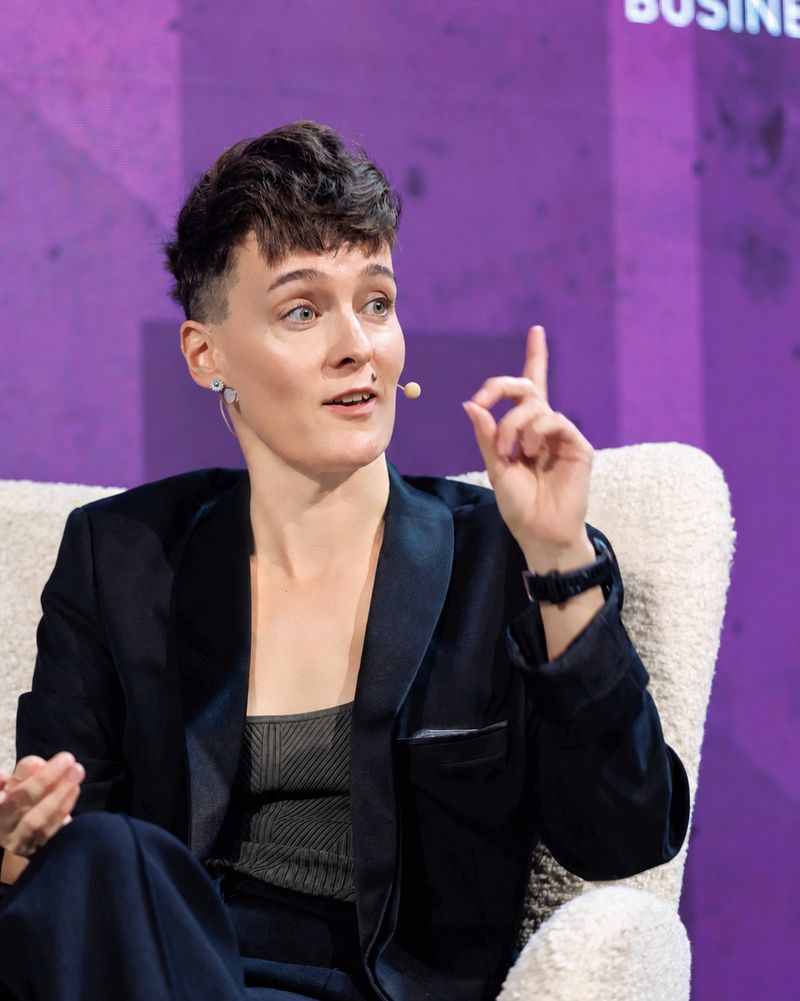
Aileen Christensen speaking at the BREL Forum in Riga.

Recent

  • BREL Forum, RigaPanel ·

    A panel for 400 real estate leaders on what AI changes about what we need the office for.

    Read the post
  • Women in AI Benelux, AmsterdamSpark Talk and roundtable ·

    A Spark Talk on why an agent can pass every test and still lose its users, followed by a roundtable I moderated on measuring AI after launch.

    Read the post
  • Agent-building workshop, ElsevierWorkshop ·

    A hands-on workshop for 150 people in our Amsterdam office, run in person with AI champions helping people build their first agent at their desks.

  1. i

    AI adoption is a behaviour change problem

    • Why buying licences doesn't create usage, and what does.
    • The order that makes it stick: change the workflow first, then build the habit, then write it into objectives.
    • Why each team needs its own specialist way in, instead of one enterprise-wide rollout.
  2. ii

    Passing its tests, losing its users: owning AI agents after launch

    • Why an agent can pass every eval and still lose its users, and why workarounds are the earliest sign.
    • Why you should read usage data and talk to users together, because the data shows that something is wrong but only the people can tell you why.
    • Why ownership belongs with the business, not the builder, including the decision to fix or retire an agent.
  3. iii

    What AI changes about work, teams and the office

    • People can learn the tools on their own. Learning how roles, judgement and teams change around those tools needs time in the same room.
    • When AI takes over entry-level work, junior people need to sit with experienced colleagues to learn judgement faster.
    • Teams whose roles are being automated can become the owners of the agents that replace that work.
Aileen Christensen

Speaker bio

Aileen Christensen works on the part of AI adoption that tools don't solve: changing how people work. At RELX (Elsevier) she pitched and created the role of AI and Innovation Lead for a 200+ person marketing organisation, built a repeatable adoption playbook that took monthly GenAI usage above 90%, and led a five-person agent-builder team. Her workflow redesign cut content production from three hours to twenty minutes per asset. She has spoken at the BREL Forum in Riga and Women in AI Benelux, and runs hands-on agent-building workshops. She holds an Executive MBA from IE Business School and writes about AI, leadership and work on Substack.

Education

IE Business School

Executive MBA, 2024 – 2025

Dean's List

Yale School of Management

Behavioural Science of Management, 2025

Monash University

Business, Marketing and Management

Certified Scrum Master

Contact

Let's talk.

I'm always glad to compare notes with founders, CMOs and operators working out how AI changes the way marketing and go-to-market teams work, whether that's a conversation or an advisory engagement.